Gluten-Free Wheat Starch: The Lesser-Known Ingredient That Improves Breads and Pastries
Gluten-free baking has improved dramatically, yet reproducing the softness of bread, the clean crumb of cake and the delicate structure of pastry remains difficult. One ingredient offers an unusual route forward: wheat starch processed until its gluten content falls within regulated gluten-free thresholds. Familiar to food manufacturers but less visible to home bakers, it can help solve several texture problems that alternative starches do not always address as effectively.
Why wheat starch behaves differently
Ordinary wheat flour contains both starch and proteins, including the proteins that form gluten when flour is mixed with water. Wheat starch is different. It consists primarily of the carbohydrate fraction separated from those proteins. When the ingredient undergoes additional processing to remove gluten-containing protein fractions, the resulting deglutenated wheat starch can retain many of the functional characteristics associated with conventional wheat starch while containing only very small amounts of gluten.
That distinction matters in baking because starch does much more than bulk out a recipe. During heating, starch granules absorb water, swell and gelatinize, helping baked goods set as they cook. Different botanical starches behave differently under heat, hydration and mechanical stress, which is why simply replacing wheat flour with rice flour, corn starch or tapioca starch rarely recreates the same result. Processed Wheat derivatives can therefore give formulators another tool when they need thickening, structure and stability without relying entirely on the starch systems commonly used in gluten-free baking.
The regulatory detail is essential. Under European Union rules, a food sold as “gluten-free” may contain no more than 20 mg of gluten per kilogram. The regulation also recognizes foods containing specially processed ingredients derived from gluten-containing cereals, provided the final product satisfies the relevant limit. Gluten-free wheat starch is therefore not simply conventional wheat starch placed in a gluten-free recipe. Its processing, specification and final gluten concentration determine whether it can legitimately be used in products carrying that claim.
Bread gains structure without heaviness
Bread exposes the weaknesses of gluten-free formulations particularly quickly. Without a gluten network, dough cannot trap fermentation gases in the same way as conventional wheat dough, and loaves can emerge dense, crumbly or unusually moist. Bakers compensate with combinations of starches, flours, fibers and hydrocolloids, but every addition changes hydration, flavor and handling. A starch that performs more like traditional wheat starch can make that balancing act easier.
Deglutenated wheat starch contributes to the structure formed as the loaf heats, helping the crumb stabilize around the gas cells created during fermentation. It can also support a lighter texture than formulations dominated by heavier whole-grain gluten-free flours. The result depends on the entire recipe rather than on one ingredient, yet the starch component remains central because it determines how water moves through the dough and how firmly the crumb sets during baking.
Practical adjustments still matter. Gluten-free dough often requires more hydration than conventional bread dough, and recipes usually benefit from resting time so starches and fibers can absorb water evenly before baking. Changing one starch may therefore require retesting water levels rather than making a gram-for-gram substitution and expecting identical behavior. For home bakers, smaller test batches reduce waste. For professional kitchens and bakeries, systematic trials with fixed hydration, proofing time and baking temperature make it easier to identify whether a new starch genuinely improves volume and softness.
Pastries need control as much as lift
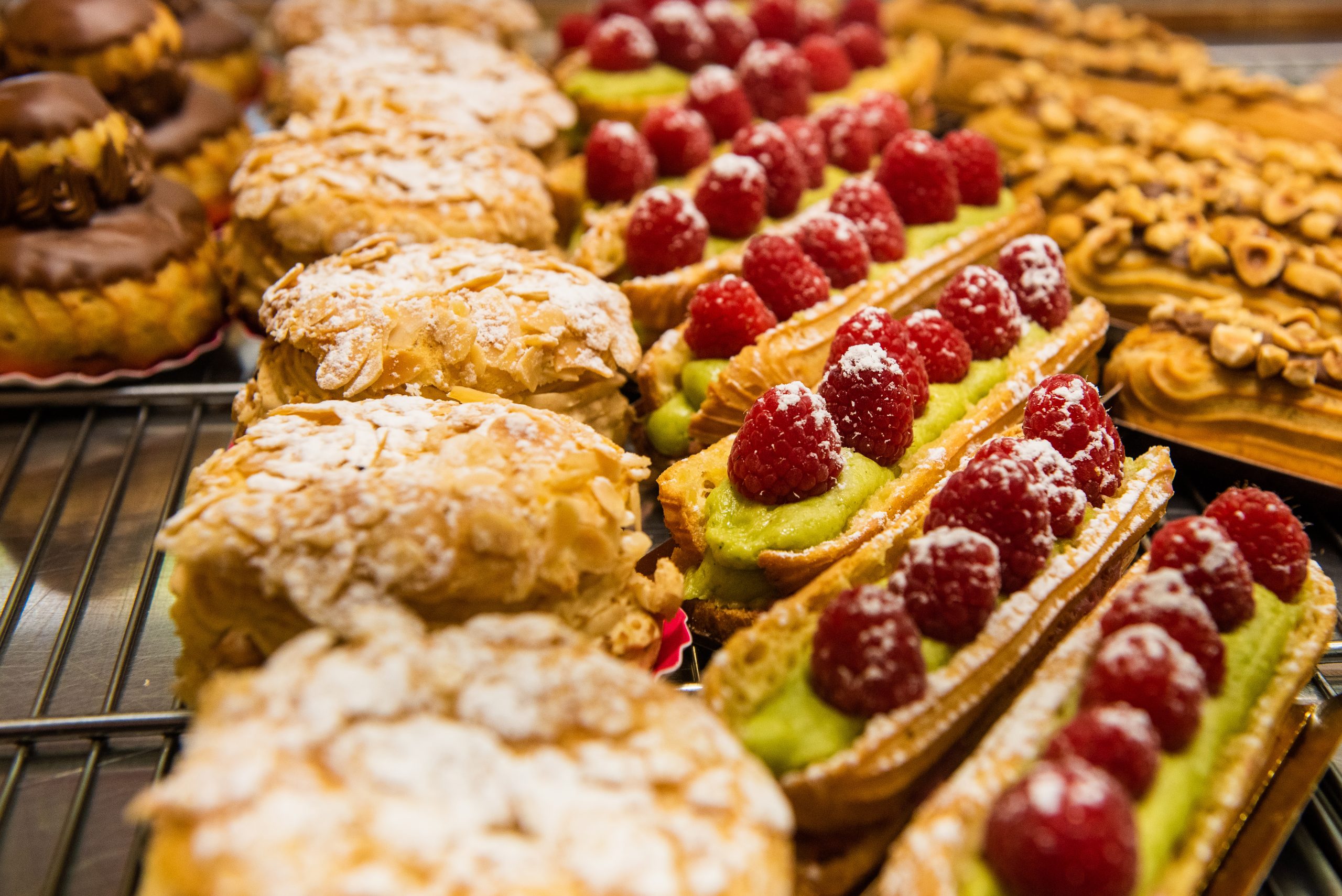
Pastry creates a different problem because success often depends on tenderness rather than elasticity. Cakes need enough structure to hold air while remaining soft, biscuits should stay crisp without becoming sandy, and pastry shells must resist breaking while avoiding excessive toughness. Gluten-free recipes often rely on several flours and starches because no single replacement delivers all of those properties at once.
Wheat starch can be particularly useful where a relatively neutral starch profile and predictable thickening behavior are desirable. In cakes, starch gelatinization helps reinforce the structure created by eggs, fats and leavening agents as the batter heats. In cookies and short pastry, controlling the balance between starch, fat and water influences spread, snap and friability. Custard-filled pastries add another requirement because the same formulation may need a stable cream alongside a shell or sponge that remains structurally sound after storage.
Budget also influences ingredient choices. Specialist gluten-free blends can contain long lists of flours, fibers, gums and starches, and their cost varies substantially. Bakers comparing formulations should calculate the price per finished loaf or pastry rather than judging ingredients by package price alone. A starch that simplifies a blend or reduces failed batches may prove economical even when its purchase price is higher. Anyone baking for a medically restricted diet should also check certified gluten levels and allergen labeling carefully, because gluten-free suitability and wheat allergy are not the same issue.
Better baking starts with the formulation
Gluten-free wheat starch cannot recreate gluten itself, but it can improve the starch system on which breads and pastries depend. Used with appropriate hydration, binders and careful testing, it offers bakers another route toward lighter bread, cleaner pastry textures and more consistent results without treating every gluten-free recipe as a complete compromise.